General Fundraising

How the Napa quake will impact your charity event

Charity events nationwide are lubricated with the generosity of vintners and winemakers. Whether we’re talking about a single bottle or a wine country experience, wineries often provide the foundation upon which successful fundraising events are built. So it is natural to wonder what is going to happen to your fundraising event in the wake of the 6.0 earthquake that struck Napa and Sonoma counties on Sunday, August 24th.

We should start by doing an honest assessment of the damage to the Napa Valley. The vast majority of Napa came out relatively unscathed. Most wineries had little to no damage, including wineries whose storage facilities were at the epicenter of the quake.

“We lost a total of about six bottles,” said Stuart Bryan of Pride Mountain Vineyards, even though their storage facility is less than a quarter mile from the epicenter. “We palletize all of our boxes of wine, and then shrink-wrap each pallet. Everything was fine.

“But if the building had collapsed,” continued Stuart, “we’d have lost everything.”

A small minority of wineries got hit exceptionally hard, and they have been getting the most news coverage. Trefethen Family Vineyards, for example, has been one of the unfortunate poster children for damage done by this quake. Their historic Eshcol Winery building, built in 1886, buckled during the quake and its fate is being decided by structural engineers.

Trefethen is visible from highway 29, and the sight of their three-story winery buckled and leaning is a moving one. But if there is good news it is the fact that Trefethen was between bottling their last vintage and harvesting this one: their winery was essentially empty. They may be looking at a loss of their building, but their wine remained intact.

The same cannot be said for The Hess Collection. Situated on Mount Veeder, Hess sustained some of the most graphic, and costly damage in the quake. “Mount Veeder is the mountain closest to the epicenter,” says Samuel J. Peters, the Executive Director of the Mount Veeder Appellation Council, “but that’s not the reason it took such a hit. All of the other mountains in Napa have volcanic soil, and their terrain is much firmer. Mount Veeder was seafloor, and didn’t fare well.”

Hess, specifically, lost over $4 million in wine when their pressure-sealed, full-of-wine storage tanks were crushed like so many empty aluminum cans  sending a flood of wine out onto their wine tasting patio. A few rows of their barrels also collapsed, making for stunning photos and video – and sending the erroneous message that Napa had been shut down.

The majority of Napa is open for business. As of this writing there are 58 red-tagged businesses. Hess isn’t one of them – in fact, Hess has been actively campaigning to get people to come to Napa, and making the most of the situation with humor and aplomb. Their Labor Day Weekend Tasting Menu included a selection between the "Summer Shakes," "Triumphant Tremor" or the "Falling Rock Collection."

So how does this all impact you and your charity event?

I don’t know for sure, and it is going to be up to you to find out. You’re going to have to do some legwork, strengthening your vintner relationships, and checking in with your contacts to see where they are at.

Reach Out

If you have existing relationships with wine producers in Napa, or Sonoma for that matter, who donate to your event you need to reach out to them to see how they fared. Do a quick search online to discover what you can first, in case they are one of the wineries that took a major hit. Odds are they came through mostly unscathed. Either way, they will appreciate you reaching out.

Calibrate your Own Expectations

If a winery that you depend on did take a significant hit in the quake, offer them a year off from participating in your event. If they need a break, they will appreciate it – and if they don’t need a break, they will appreciate the thought.

Make No Assumptions

Even if one of your vintner partners did take a significant hit, reach out to them and find out how best you can work together on your upcoming event. They may need the time off, but they may need the marketing your event provides even more. Have conversations with people: it is the best way to build and strengthen relationships.

Vintners and winemakers are, as a whole, one of the most generous groups of business people in the United States. They consistently use their powers for the greater good, contributing to fundraising events all over the nation. The damage caused by this one earthquake isn’t going to change that commitment overnight. In fact, it will probably only make it stronger.
An Unredeemed Lot is an Excellent Donation

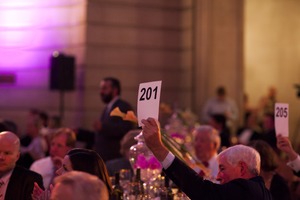
At a recent planning meeting where we were discussing repeat auction lots for an event, it came out that one of the donors felt seriously slighted because their lot was never redeemed. A buyer had paid top-dollar for the lot at the auction, and had yet to cash it in with the expiration date looming. The donor felt slighted, and was inclined not to make the donation again.

Over the past decade, we've consistently seen an average of 45% of auction lots purchased at fundraising auctions go unredeemed. This isn’t a function of the desirability of the lots being offered at fundraising events, but a reflection of the nature of supporting causes through auction purchases. People who make a purchase at a fundraising auction do so first and foremost because they believe in the cause; the desirability of the lot simply justifies getting caught up in the heat of the moment and (hopefully) overpaying.

Buyers assume that 100% of the money is going to the organization putting on the auction: if they don’t redeem the lot they will have still made a good donation to the cause. Most buyers also support more than just one cause, and often have shoeboxes full of certificates they keep meaning to redeem. Buyers aren’t trying to slight donors, they simply lead busy lives and have scheduling conflicts.

It is understandable that some who donate lots to an auction most often do so because they really were looking forward to making their event happen. There are a lot of possible solutions, such as putting the donor in direct contact with the buyer to coordinate the event, but they are all fraught with potential for disaster.

The simple solutions is to assure donors that their donation is loved: by you and the people who bought it. Their donation helped raise significant amounts of money for a cause they believe in. If the buyers haven’t taken them up on their generosity yet, it is not a reflection of how wonderful their lot is. It’s just more proof that we all lead insanely busy lives, and sometimes making time to show up and buy the lot is a major accomplishment, let alone making the lot happen.

Why No Fundraising Auctioneer Should Charge a Commission

No benefit auctioneer's compensation should be tied to the generosity of an organization's supporters.

As a profession, auctioneering has long had performance tied to compensation. Auctioneers have based their worth, literally, on their ability to market and sell assets for their clients. This makes complete sense in the world of antiquities, fine art, liquidations, estate sales, vehicle auctions, real estate auctions and the like, but it is unconscionable in the world of charity fundraising auctions.

A good collectibles auctioneer, for example, has an established system of creating a market for the extremely niche goods they bring to auction, and it is the capability of the auction house to create that market that earns them a commission. Sellers take their high-end antiques, art and collectibles to Bonhams and Butterfields because Bonhams has an established reputation and client base. Bonhams earns their commission on each and every piece they sell because they create a market within which they can sell each and every piece for top dollar.

The logic of paying a commission breaks down, however, with fundraising auctions. Fundraising auctioneers don’t single-handedly create the market at charity events. We don’t advertise the sale, nor pretend to be able to bring the bidders to the table. As fundraising consultants we work with clients to help hone best practices of bidder and donor development, and we put on an engaging show that raises top dollar at the event. But we would never attempt to claim that we are solely responsible for the bidders who come, or the attitude they bring with them.

Bidders at charity events support causes: they overpay for things they don’t need because the money is serving the greater good. Consider the bidder we frequently see at Bay Area events who will often indicate that he wants to pay more than the final sale price on an item, because he didn’t think it sold for high enough. As we’re announcing his paddle number and the amount he bought the item for he will shake his head and indicate that he wants to pay more than that, often jumping his own bid up a thousand dollars or more.

No auctioneer deserves to earn more because of a bidder’s commitment to an organization.

Charging a commission also muddles the motivation of the auctioneer. My goal at each and every event I do is to make as much money as possible for the charity, while maintaining a sense of goodwill with the bidders. That last part is crucial, because for an event to be successful the big bidders have to want to come back and do the event again next year. I could easily get more money out of each crowd I work with, but any crowd that felt as if they’d been bled dry would never want to come back and support that organization again.

Furthermore, there is no way of knowing when two big bidders are going to show up and battle it out over a particular auction lot. There are a few philanthropists in the world who are prone to showing up at various fundraising auctions willing to bid heavily through the auction, often spending more than $25,000 on  single lots.

If one such philanthropist happened to show up at an event I was doing and drove the overall price of the auction up $100,000 it does not mean I am inherently worth $10,000 more that particular evening (But it would be awesome for the charity!). Perhaps the greatest affront of all is the fact that there are auctioneers out there who charge commissions on the “Fund a Need” portion of an auction, but that topic alone is worth its own post, coming soon.

If the auctioneer you are working with insists on charging a commission, renegotiate your contract or find a new auctioneer. Because you and your attendees are getting taken advantage of.

When Surprises and Fundraising Do Mix

One of my long-held tenets is that surprises in a fundraising auction seldom succeed. Many times have I stood onstage with a donor who midway through the bidding decided to "spice up the lot" and add to it in an attempt to raise more money. Usually their efforts generate exactly zero more bids.

But for every "rule" in fundraising, there is an exception to it, and this year I've been surprised by a few onstage surprises that worked.  While it is never possible to predict when a donor will pull an impromptu add-on, knowing these will help guide you when a donor gives you advance warning of their plan.

Radical Upgrade: The change being made to the lot was a major one, radically increasing the value of the lot. This isn't about simply "adding two more seats to the dinner" here. We're talking about adding 18 onfield-passes to the 18-person luxury suite at a Raiders game, so the winning bidder and all of their friends can go down on field and meet the players before the game.

Other major upgrade examples include a donor throwing in first-class airfare on the spur of the moment, or a vintner agreeing to show up in person to do the wine-pairing for a dinner instead of just donating the wine.

Donor Celebrity: It is also imperative that the person making the changes to the auction lot has celebrity status within the crowd. The guy who jumped up at his table and announced that he'd add 18 onfield-passes to the Raiders game was a high-level executive within the Raiders organization. People were as interested in impressing him as they were getting the additional benefits he was adding to the lot.

Lots of times someone will make a change to a lot believing they have major celebrity status with the crowd, only to find out otherwise. It's a painful moment onstage, one that usually gets blamed on the crowd, not the would-be celebrity.

Easy to Understand Changes: It is hard for an audience to hear what is going on at an auction, it's the simple truth. Making changes to an auction lot mid-auction are difficult, because people simply cannot hear the changes - and even if they can hear, they have to be able to process them.

If a donor is going to change a lot on the fly, try to make sure it is a simple, easy to understand change, such as adding more seats to the dinner or doubling the number of people who can go on the trip. Finer points, such as, "we'll be having the '72 Y'Quem instead of the '84" will get lost in the shuffle.

Generally speaking, surprises in a fundraising auction aren't a good idea. But if a donor insists, do your best to guide them to a surprise that is going to work for everyone - but especially you.